Guide / Plumbing
Unclog a drain.
A slow kitchen or bathroom drain — caused by hair, soap scum, or food debris — can almost always be cleared mechanically without chemicals. Here’s the standard sequence.
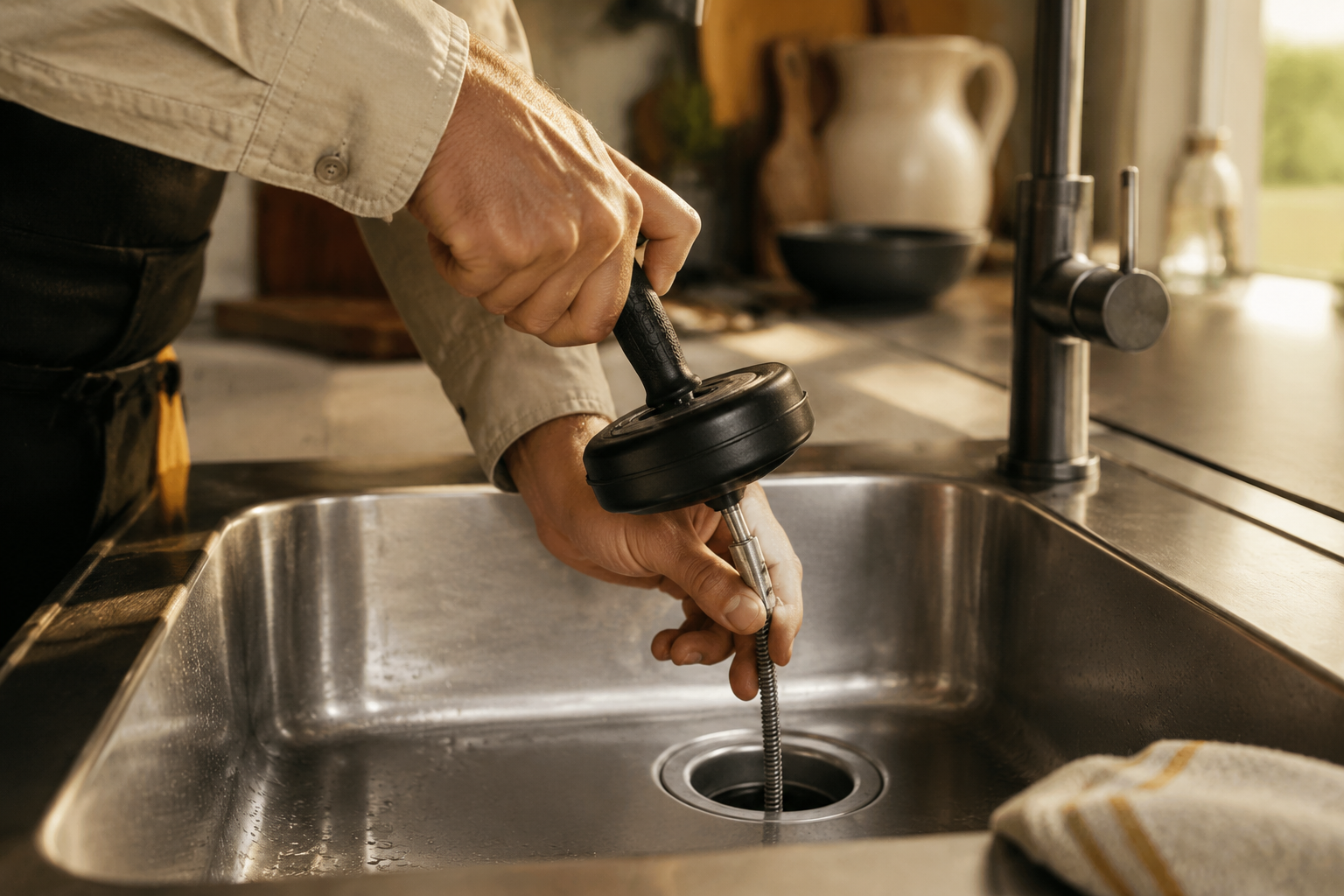
You’ll need.
- A manual drain auger (5m hand-crank type)
- Rubber gloves
- Bucket and rags
- Adjustable wrench (if the trap needs to come off)
Time: 20–40 minutes
From kit: Plumbing Emergency Kit (A-02)
Steps.
Try the plunger first.
A flat-cup plunger sealed over the drain opening can clear ~60% of slow drains without any further work. Run a bit of water, get a seal, plunge ten times with force. Test the drain.
If the plunger fails, get under the sink.
Place a bucket under the P-trap (the U-shaped pipe). Use the adjustable wrench to loosen both slip nuts on the trap. Pull the trap free — water will spill out, that’s expected. Check the trap for visible blockage and clean it out.
If the trap was clean, the clog is downstream.
Feed the drain auger into the vertical pipe behind the trap. Crank the handle to extend the cable. When you feel resistance, crank harder and twist — you’re hooking the clog. Pull the cable back slowly, removing the clog with it.
Reassemble the trap.
Replace the trap with both slip nuts. Hand-tight first, then a quarter-turn with the wrench. Run hot water for 30 seconds while you check the trap joints with a paper towel — any drip means re-tighten that joint.
Run hot water and check the flow.
Hot water for 60 seconds. The drain should flow normally. If it’s still slow, you have a clog further down the line — that’s the point where calling a plumber starts to make sense.